
Key takeaways
- Hardwired smart smoke and CO detectors with battery backup from First Alert, Kidde, Nest and Owl, compared on backup power type, interconnect and app alerts.
As an Amazon Associate I earn from qualifying purchases. This post may contain affiliate links at no extra cost to you.
A hardwired alarm circuit is only as dependable as what happens when the power drops. Storms, tripped breakers and utility work all cut household current at exactly the moments when heating equipment runs hardest and fire risk climbs, so the best smart smoke and co detectors with hardwired battery backup pair a 120-volt connection with a reserve cell that keeps sensing, sounding and sending phone alerts through an outage. Every pick below wires into the ceiling circuit and carries a backup battery, and each one adds smart features such as app notifications, voice location announcements or air quality readings on top of that wired foundation.
The seven models split into two backup camps. Sealed lithium designs from First Alert, Kidde and Owl run for years without a battery swap, while replaceable-cell designs from Kidde and Google use AA batteries that cost little and take seconds to change. Interconnect behavior matters just as much: some alarms relay through the third wire in the ceiling, some build their own wireless network, and the strongest do both, so a basement event reaches every bedroom siren in the house.
Coverage planning comes before brand loyalty. Building practice calls for alarms inside every bedroom, outside each sleeping area and on every level of the home, with CO detection near fuel-burning appliances, and a hardwired circuit usually already serves most of those points in homes built or renovated in recent decades. A rewrite of an older alarm fleet is the natural moment to audit the map: count the wired points, note which rooms lack one, and decide whether the new fleet stays purely wired or mixes in battery companions on the same interconnect plan, a combination several systems here support.
Quick verdict
For most wired homes, the First Alert SC5 Hardwire is the balanced pick: photoelectric smoke sensing, a sealed lithium backup, voice alerts and app notifications in one unit. The Kidde 30CUAR-W is the practical value choice because its backup cells are ordinary AA batteries that any store stocks. Homes that want more than alarms should look at the Owl Wired, which layers motion, temperature, humidity and air quality sensing onto the same ceiling mount, while the First Alert Onelink Safe & Sound doubles as a smart speaker. The Google Nest Protect Wired remains the friendliest voice-alert system, and the Kidde P4010ACSCOAQ-WF adds indoor air quality monitoring for homes tracking ventilation.
Comparison table
| Product | Key spec | Best for |
|---|---|---|
| First Alert SC5 Hardwire Smart Smoke & CO Alarm (SMCO600NV-AC) | Sealed lithium backup, photoelectric sensor | Most hardwired homes |
| First Alert Onelink Safe & Sound (1039102) | Built-in Alexa speaker, sealed backup | Smart speaker plus alarm |
| Kidde Smart Smoke + CO Alarm 30CUAR-W | Replaceable AA backup, 2.4 GHz Wi-Fi | Easy battery upkeep |
| Kidde Smoke + CO Alarm with Indoor Air Quality Monitor P4010ACSCOAQ-WF | Sealed 10-year backup, TVOC sensor | Air quality tracking |
| Owl Wired by Owl Home | Rechargeable backup, five extra sensors | Sensor-rich installs |
| Kidde Smart Smoke & CO Alarm with Ring (Wired) RGCUAR-RW | AA backup, Ring app alerts | Ring households |
| Google Nest Protect (Wired) S3003LWES | Split-Spectrum sensor, AA lithium backup | Voice location alerts |
How we chose
The shortlist started with one non-negotiable filter: the alarm had to draw primary power from a 120-volt hardwired circuit and carry a battery that takes over automatically when that circuit dies. Battery-only models, however capable, were set aside, as were wired alarms with no backup at all. Each surviving model then had to add genuine smart behavior, meaning phone alerts, voice announcements, platform integration or extra sensing beyond a plain siren.
From there, the maker listings and manuals supplied the details that separate these units: backup chemistry and whether the cell is sealed or replaceable, smoke sensor type, interconnect method and device ceiling, app ecosystem, and the standards the alarm is listed to, such as UL 217 and UL 2034. Voice alerts earned weight because a spoken room name shortens the path from waking to acting. Finally, each pick had to suit a different household pattern, from renters of wired homes who want AA cells they can swap themselves to owners planning a ten-year set-and-forget install.
First Alert SC5 Hardwire Smart Smoke & CO Alarm (SMCO600NV-AC)
- Power: hardwired 120V with sealed 3V lithium battery backup, non-replaceable
- Sensing: photoelectric smoke sensor plus electrochemical CO sensor
- Interconnect: hardwired link up to 18 First Alert and BRK alarms, plus SC5 and Nest Protect compatibility through the Google Home app
- Smart features: Resideo Connect app alerts, voice alerts, Quick Connect plug in the box
- Output and life: 85 dB at 10 ft, 10-year limited warranty
The SC5 Hardwire is the current flagship wired alarm in the First Alert line, and its spec sheet reads like a checklist for this category. The photoelectric smoke sensor favors early warning on smoldering fires, the sealed lithium backup removes battery maintenance for the life of the unit, and the hardwired interconnect means one alarm sounding pulls the whole wired chain with it. Voice alerts name the hazard, and the Resideo Connect app pushes the same event to a phone for anyone away from home.
The Quick Connect plug matters more than it sounds: many ceiling boxes hold older First Alert or BRK harnesses, and a plug-in swap shortens the changeover. The trade-offs are ecosystem-shaped rather than safety-shaped. App features run through Resideo Connect and Google Home rather than a broad set of platforms, and the sealed backup means the whole unit is replaced at end of life instead of refreshed with new cells.
Pros: Sealed backup with zero battery chores; hardwired interconnect up to 18 alarms; voice alerts plus app notifications
Cons: Sealed cell means full unit replacement at end of life; app path centers on Resideo and Google Home
First Alert Onelink Safe & Sound (1039102)
- Power: hardwired 120V with sealed lithium battery backup
- Sensing: photoelectric smoke sensor plus electrochemical CO sensor
- Smart features: built-in Alexa, premium speaker, Apple HomeKit, Onelink Home app alerts
- Interconnect: links with other hardwired alarms, including non-First Alert brands, adapter plugs included
- Extras: nightlight, 85 dB siren, 3-year limited warranty
The Safe & Sound uses the ceiling alarm as a place a smart speaker already wants to be. It packs Alexa and a premium speaker into a hardwired smoke and CO alarm, so the same mount that watches a hallway also plays music, answers questions and takes voice commands. The sealed lithium backup keeps the alarm side running through outages, and the included adapter plugs help it land on existing harnesses from other brands, a rare courtesy in this category.
Apple HomeKit support sets it apart from most rivals here, and the Onelink Home app handles alerts and status. The compromises: the speaker hardware makes this one of the larger and heavier ceiling units, the warranty runs three years against ten-year terms elsewhere in this roundup, and buyers pay for audio hardware they may not need in every room. It makes the most sense in a living area or kitchen where the speaker earns its keep daily.
Pros: Alarm, Alexa and speaker in one ceiling device; HomeKit support; adapter plugs ease brand swaps
Cons: Three-year warranty is short for the class; speaker hardware wasted in quiet rooms
Kidde Smart Smoke + CO Alarm 30CUAR-W
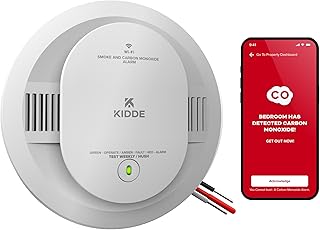
- Power: hardwired 120V AC with 2 replaceable AA backup batteries
- Sensing: photoelectric smoke sensor plus electrochemical CO sensor
- Smart features: Kidde app alerts, hush from phone, voice alerts for fire and carbon monoxide
- Network: 2.4 GHz Wi-Fi only; Wi-Fi features need AC power
- Listings: UL 217 and UL 2034; 85 dB at 10 ft
The 30CUAR-W is the pick for households that distrust sealed batteries. When the backup cells fade, two fresh AA batteries from any drawer restore the reserve in under a minute, and that pattern can repeat for the whole service life of the alarm. The hardwire interconnect relays alerts from other Kidde hardwired alarms on the circuit, and the voice alerts announce the hazard type in plain words.
Kidde is candid about the limits: the Wi-Fi radio works on 2.4 GHz networks only, and Wi-Fi features need AC power, so during an outage the alarm still sounds locally and interconnects, but phone alerts pause until power returns. Buyers who want app alerts that survive an outage should weigh the sealed-battery models above. For everyone else, this is a straightforward, standards-listed wired alarm with the cheapest possible battery upkeep.
Pros: Backup cells are cheap, common AA batteries; voice alerts; hush from the phone
Cons: App alerts stop during power outages; 2.4 GHz Wi-Fi only
Kidde Smoke + CO Alarm with Indoor Air Quality Monitor P4010ACSCOAQ-WF
- Power: hardwired 120V AC with sealed 10-year lithium battery backup
- Sensing: smoke and CO detection plus an IAQ sensor reading TVOC, temperature and humidity
- Smart features: Wi-Fi, Kidde app with Kidde HomeSafe notifications and replacement notices
- Interconnect: up to 24 Kidde devices; Smart Hush from the app on the same Wi-Fi network
- Coverage: 10-year limited warranty
This Kidde variant answers a different question: not just whether the air holds smoke or carbon monoxide, but whether it holds the volatile compounds that build up from cooking, cleaning products and new furniture. The IAQ sensor tracks TVOC alongside temperature and humidity, and the Kidde app surfaces the readings with the alarm status, so one ceiling device covers safety and everyday air awareness.
The sealed ten-year backup and 24-device interconnect ceiling match the strongest wired specs in this roundup, and replacement notices in the app address the most common alarm failure of all, the unit everyone forgot to renew. The honest caveat is that Kidde does not headline the smoke sensor type for this model the way it does for the 30CUAR-W, so buyers set on a named photoelectric chamber should compare carefully. As an air-quality-forward wired alarm, though, it stands alone here.
Pros: Adds TVOC, temperature and humidity tracking; sealed decade-long backup; 24-device interconnect
Cons: Smoke sensor type not headlined by the maker; app hush needs the same Wi-Fi network
Owl Wired by Owl Home

- Power: hardwired AC with rechargeable lithium-ion backup battery, up to a week on backup per the maker FAQ
- Sensing: photoelectric smoke plus electrochemical CO, and motion, sound, temperature, humidity and air quality sensors
- Smart features: Wi-Fi, Owl Home app alerts, Apple HomeKit and Matter certified
- Interconnect: interconnect wire works alongside traditional interconnected alarms; up to 20 Owl devices per home
- Output: 85 dB buzzer
Owl Wired is the overachiever of the group. Beyond smoke and CO, it watches motion, sound, temperature, humidity and air quality, turning each ceiling mount into a small environmental station. The rechargeable backup is the headline for this category: the maker states it can run up to a week on battery, far beyond the hours most alarms promise during an outage, and it recharges itself when power returns, so there are no cells to buy or swap ever.
Matter certification alongside HomeKit support gives it the broadest platform footing in this roundup, and the interconnect wire plays well with existing traditional alarms rather than demanding an all-Owl house. The costs are a smaller brand with a younger track record than First Alert or Kidde, and a sensor load that some buyers will find more than a hallway needs. For a main living level, the extra data is genuinely useful.
Pros: Week-long rechargeable backup; five extra environmental sensors; Matter and HomeKit certified
Cons: Smaller, younger brand; sensor suite is overkill for spare rooms
Kidde Smart Smoke & CO Alarm with Ring (Wired) RGCUAR-RW
- Power: hardwired with AA battery backup, plug-in quick connector
- Smart features: Wi-Fi alerts in the Ring app, voice alerts
- Interconnect: wire-free interconnect between units
- Monitoring: optional professional monitoring through Ring
- Sensing: smoke and CO detection in a combo unit
Ring households gain the simplest path here: a hardwired Kidde alarm that reports into the same Ring app already watching the doorbell and cameras. The wired model carries AA backup batteries and a plug-in quick connector, and its wire-free interconnect means units can rally each other without relying solely on the ceiling's third wire, which helps in homes where the interconnect wire was never run or no longer works.
The optional professional monitoring layer is the differentiator for travelers: an alarm event can escalate beyond a phone notification. Buyers should note the monitoring is a paid add-on rather than a built-in service, and the experience lives inside Ring's ecosystem, so households standardized on another platform will find the app story thinner. As a wired alarm for the Ring loyal, it is an easy fit.
Pros: Lives in the Ring app beside cameras and doorbells; wire-free interconnect helps older wiring; optional professional monitoring
Cons: Monitoring costs extra; value drops outside the Ring ecosystem
Google Nest Protect (Wired) S3003LWES
- Power: 120V AC connector with 3 AA lithium backup batteries, wire nuts included
- Sensing: Split-Spectrum smoke sensor plus 10-year electrochemical CO sensor
- Smart features: voice alerts with location, Wi-Fi app alerts, wireless interconnect with other Nest Protects
- Listings: UL 217 8th Edition and UL 2034 4th Edition
- Design: spoken friendly alerts and pathlight-style night glow
Nest Protect built its reputation on talking like a person: a calm voice names the room and the hazard before the siren commits, and that behavior still leads this category for households with children or deep sleepers. The wired version draws from the ceiling circuit with three AA lithium cells as backup, and units interconnect wirelessly with each other, so a wired Protect can rally battery Protects elsewhere in the home.
The Split-Spectrum sensor uses two wavelengths of light to distinguish fast and slow fires, and the CO sensor is rated for ten years. The caveat buyers must weigh: Google has wound down Protect production, so units in stores are remaining stock; the alarms still work and the app still supports them, but long-term shoppers should factor that horizon in. While supplies last, it remains the most polished voice-alert experience in a hardwired body.
Pros: Clearest spoken location alerts in the class; Split-Spectrum sensing; mixes with battery Protects
Cons: Production has ended, so stock is finite; AA backups need periodic replacement
Buying guide
Start with the wiring you already have. Homes with interconnected ceiling circuits should confirm the harness style in the box before ordering; adapter plugs and quick connectors, like those First Alert and Kidde include, can save a rewire. Count the alarms on the circuit and match that number against each model's interconnect ceiling, which in this group runs from 18 to 24 devices, comfortably beyond most houses.
Next, choose a backup philosophy. Sealed lithium backups promise a decade without touching a battery, and the alarm is replaced whole at end of life; replaceable AA backups trade that simplicity for cells that cost little and can be swapped the day a low-battery chirp starts. Owl's rechargeable design splits the difference, refilling itself after every outage. Neither approach is wrong, but mixing them across a house means two maintenance habits, so many owners standardize on one brand family per home.
Then weigh the smart layer. Voice alerts that name the room shorten response time more than any app feature, while app alerts matter most for second homes and frequent travelers. Air quality sensing, speakers and monitoring subscriptions are genuine extras, worth paying for in the rooms where they will be used and easy to skip in spare bedrooms. Finally, check the standards listing on the box, UL 217 for smoke and UL 2034 for CO, and write the install date on the unit; every alarm here has a finite service life, and the calendar, not the chirp, should drive replacement.
Installation deserves one practical note. A hardwired swap is a breaker-off job: kill the circuit, confirm it is dead, photograph the existing harness before unplugging anything, and keep the old alarm until the new one has sounded its first self-check. Adapter harnesses, like the plugs First Alert bundles with the Safe & Sound and the quick connector on the Kidde Ring model, exist because ceiling boxes hold decades of brand history. Where a harness truly does not match, an electrician visit for the first unit usually reveals the pattern for the rest of the house, and the remaining swaps become short work.
FAQ
Do hardwired alarms keep working during a power outage?
Yes, that is the point of the battery backup. When household current fails, the backup cell takes over sensing and sounding automatically. App alerts vary by model: some keep reporting over Wi-Fi while the router has power or its own backup, while the Kidde 30CUAR-W states plainly that its Wi-Fi features need AC power, so it sounds locally but pauses phone alerts until power returns.
Sealed battery or replaceable AA backup: which is better?
Sealed lithium backups suit owners who want a decade without battery chores and accept replacing the whole alarm at end of life. Replaceable AA cells suit owners who prefer cheap, immediate swaps and longer total hardware life. Both appear in this roundup because the right answer depends on the household's habits, not on safety performance.
Can these alarms interconnect with my existing wired alarms?
Mostly yes, within limits. First Alert and Kidde hardwired models relay along the ceiling interconnect wire, and several add wireless links to their own brand family. Cross-brand wired interconnect generally works at the siren level, while app features and voice location stay inside each brand's ecosystem. Owl's wired unit is designed to sit alongside traditional interconnected alarms.
How many hardwired alarms can link together?
The ceilings in this group range from 18 alarms for the First Alert SC5 to 24 devices for the Kidde Wi-Fi models, with Owl supporting 20 devices per home. Typical houses need far fewer, so the ceiling rarely limits a real install; mixed-brand counts follow the lowest ceiling in the chain.
Can sealed-battery and replaceable-battery alarms share one house?
Yes, and many fleets do exactly that. The interconnect wire and each brand's wireless link carry the alarm signal regardless of which backup style sits inside each unit, so a sealed Kidde in the hall and an AA-backed Kidde in the basement still rally together. The discipline is administrative rather than electrical: keep a simple list of which rooms hold which style, so the AA units get their battery rounds on schedule while the sealed units ride to their replacement year.
When should a hardwired alarm be replaced?
Smoke alarms carry a service life of about ten years from the manufacture date printed on the back, and CO sensors age out on a similar schedule. Sealed-battery models align replacement with the battery's decade. App-connected models in this roundup send replacement notices, which removes the guesswork.
Conclusion
Hardwired power with battery backup is the dependable core of a home alarm system, and the smart layer decides how pleasant that system is to live with. The First Alert SC5 Hardwire covers the fundamentals best for most homes, Kidde's 30CUAR-W and Ring wired model serve AA-battery and Ring households, the P4010ACSCOAQ-WF and Owl Wired add air awareness, the Safe & Sound adds a speaker, and the Nest Protect Wired still speaks the clearest. Match the backup style to your maintenance habits, keep every unit inside one interconnect plan, and the ceiling circuit will keep watch through calm nights and outages alike.
Related guides
More from Amazon
Programs that pair well with the guide above. Offers and eligibility are set by Amazon and may change.
Collect the home and kitchen items you want in one registry that guests can shop from.
Create a wedding registrySet up recurring deliveries of everyday items on eligible products. Terms and savings are set by Amazon.
Explore Subscribe & SaveFree shipping on eligible items, Prime Video and more. Eligible new members can start with a free trial.
Start a Prime free trialAudiobooks and podcasts to listen to on the go. Eligible new members can start with a free trial.
Try Audible freeAs an Amazon Associate we earn from qualifying purchases.
More ways to save on your next project
Programs that pair well with the guide above. Offers and eligibility are set by Amazon and may change.
A free business account with business pricing and bulk-buying tools for work, shop or home office.
Create a business accountFast, free shipping on eligible items, plus Prime Video and more. Eligible new members can start with a free trial.
Start a Prime free trialAudiobooks and podcasts for the commute, the garage or the kitchen. Eligible new members can start with a free trial.
Try Audible freeA dedicated Amazon storefront for low-price finds. Offers and eligibility are set by Amazon.
Browse Amazon HaulAs an Amazon Associate we earn from qualifying purchases. Using these links costs you nothing extra.




Write Your Review
No reviews yet. Be the first to share your experience!