
Key takeaways
- Compare smart smoke and CO detectors with photoelectric smoke sensing, voice location alerts, wireless and hardwired interconnect and app alerts for every room.
What's inside
As an Amazon Associate I earn from qualifying purchases. This post may contain affiliate links at no extra cost to you.
Our top picks at a glance
3 products from this guide, in the order reviewed below.

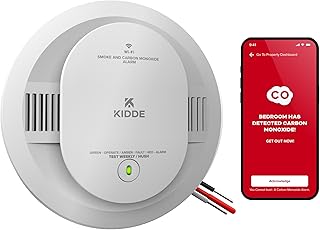

As an Amazon Associate we earn from qualifying purchases. Prices and availability can change.
Photoelectric smoke sensing is the design most makers recommend for the smoldering fires that start in upholstery, bedding, and electrical wiring, and it is also the design that best resists nuisance alarms from cooking smoke and shower steam. The sensor works by shining a light into a chamber and watching for the scattered light that smoke particles produce, which makes it most responsive to the larger particles that smoldering fires give off. The best smart smoke and CO detectors under two hundred with photoelectric smoke sensing are the models that pair that sensor with an electrochemical carbon monoxide sensor, add voice location alerts and app notifications, and fit a per-unit budget that lets a household cover every bedroom and every level. This guide compares seven such models, explains how photoelectric sensing differs from ionization sensing, and shows how to pick the right one for each room.
The photoelectric and ionization designs respond to different fires. A photoelectric chamber is most responsive to large smoke particles from a slow smoldering fire, while an ionization chamber is most responsive to the small particles from a fast flaming fire. Most makers now ship photoelectric models as the default for bedrooms and hallways, and several models in this guide pair the photoelectric chamber with a second sensing method: the Nest Protect family uses a split-spectrum sensor that reads two wavelengths, and the SC7010B adds Optipath 360 technology to its photoelectric chamber. No sensor design is described here as able to stop a fire; each one is an alerting device, and the guide stays with what the makers list about response and nuisance resistance.
The seven alarms below were picked because the maker lists a photoelectric smoke sensor for each one, because each one is a combination smoke and carbon monoxide alarm, and because each one sits in the per-unit range the keyword describes. The lead pick is the First Alert BRK SC7010B, because it pairs a photoelectric chamber with Optipath 360 technology, a hardwired 120V connection with a two AA battery backup, and a Quick-Connect wiring harness that fits existing boxes. The First Alert SC5 Battery follows for battery rooms, the Kidde 30CUAR-W for wired circuits that want a smart relay, and the X-Sense SC07-W for sealed ten-year battery networks. Prices are expressed in words only in this guide.
Quick verdict
For most households, the First Alert BRK SC7010B is the strongest starting point. The maker lists a photoelectric smoke sensing chamber with Optipath 360 technology, an electrochemical carbon monoxide sensor, a hardwired 120V connection with a two AA battery backup, and a Quick-Connect wiring harness. The photoelectric chamber is described as responsive to smoldering fires while resisting nuisance alarms, and the end-of-life signal sounds after ten years. It is a straightforward hardwired alarm without an app, which keeps the focus on sensing, and it fits the existing junction box with the harness the maker lists. The trade-off is the lack of phone alerts: a household that wants app notifications should pair it with a connected model or pick one of the smart models below.
The First Alert SC5 Battery is the best battery pick, with a photoelectric sensor, both UL listings, replaceable CR123A batteries, voice location alerts, and app alerts through Google Home and the Resideo Connect app. The Kidde P4010ACSCO-W is the best wired smart pick, with a sealed ten-year lithium backup, voice alerts, and hardwire plus wire-free interconnect. The Kidde 30CUAR-W adds Wi-Fi and a relay feature that gives mobile alerts to older wired Kidde alarms on the same circuit. The X-Sense SC07-W covers battery networks with a sealed ten-year cell and an LCD readout, the Onelink battery model 1042136 brings HomeKit, and the Onelink Safe and Sound adds a speaker and a nightlight to the hardwired photoelectric set. Any of the seven senses with a photoelectric chamber; the choice turns on power, wiring, and app.
Comparison table
| Product | Key spec | Best for |
|---|---|---|
| First Alert BRK SC7010B | Photoelectric sensor with Optipath 360; hardwired 120V; 2 AA backup | Hardwired rooms wanting photoelectric sensing with a quick harness |
| First Alert SC5 Battery SMCO600NV | Photoelectric sensor; UL 217 10th Ed and UL 2034; 6 CR123A batteries; app alerts | Battery rooms wanting listed photoelectric sensing and replaceable cells |
| Kidde P4010ACSCO-W | Photoelectric sensor; hardwired 120V; sealed 10-year backup; voice alerts | Wired Kidde circuits wanting sealed-battery photoelectric sensing |
| Kidde 30CUAR-W | Photoelectric sensor; hardwired 120V; 2 AA backup; Wi-Fi; relay alerts | Wired Kidde circuits needing one smart relay unit |
| X-Sense SC07-W | Photoelectric sensor; sealed 10-year battery; RF interconnect; LCD CO readout | Battery networks with a carbon monoxide display |
| First Alert Onelink Battery 1042136 | Photoelectric sensor; battery powered; Wi-Fi; HomeKit; voice location alerts | Apple households wanting wireless photoelectric sensing |
| First Alert Onelink Safe and Sound 1039102 | Photoelectric sensor; hardwired 120V; adapter plugs; Alexa speaker | Hardwired rooms wanting a speaker and nightlight |
How we chose
The first filter was the sensor. Every model here is listed by its maker as using a photoelectric smoke sensor, and the guide records the exact wording where the maker gives it: the SC7010B lists a photoelectric chamber with Optipath 360 technology, the SC5 Battery lists a photoelectric sensor, the Kidde models list a photoelectric sensor, and the X-Sense and Onelink models list the same. Ionization-only models were left out, because the keyword asks for photoelectric sensing, and a model whose sensor type the maker did not publish was left out too. Each model also carries an electrochemical carbon monoxide sensor, which the makers describe as the accurate technology for carbon monoxide.
The second filter was the combination design. Every model here detects smoke and carbon monoxide in one unit, so a single ceiling device covers both hazards. A smoke-only or carbon monoxide-only alarm would leave half the job undone, and those were left out. The third filter was the smart layer: six of the seven models offer app alerts, voice announcements, or both, and the SC7010B is the exception, included because it is the strongest pure photoelectric hardwired pick and because its harness fit answers the replacement question for wired houses. The guide is clear about which models are connected and which are not, so a household that wants phone alerts can pick accordingly.
Budget shaped the fourth filter. The keyword describes a per-unit range, and a household covering every bedroom and every level needs six to eight alarms, so the per-unit cost decides whether the project happens. The models here sit in that range, and the guide avoids premium models that would make a full-house set unaffordable. Power and interconnect came next: the set covers hardwired rooms, battery rooms, and mixed houses, with wired interconnect on the hardwired models and RF or wireless interconnect on the battery models. Finally, we read the maker pages for service life, battery type, and horn rating, so the guide states what each model lists rather than guessing. The result is a set where any pick senses with a photoelectric chamber, and the choice turns on the room, not the sensor.
First Alert BRK SC7010B
- Photoelectric smoke sensing chamber with Optipath 360 technology
- Electrochemical carbon monoxide sensor with ten-year sensor life
- Hardwired 120V AC with 2 AA battery backup
- Quick-Connect wiring harness
- End-of-life signal after ten years; 85 dB horn
- UL 217 and UL 2034 listed; ten-year limited warranty
The SC7010B leads this guide because it is the clearest photoelectric hardwired pick. The maker lists a photoelectric smoke sensing chamber with Optipath 360 technology, which the product page describes as detecting smoke from smoldering fires while minimizing nuisance alarms, and an electrochemical carbon monoxide sensor with a ten-year service life. Power comes from a hardwired 120V AC connection with a two AA battery backup, and the Quick-Connect wiring harness makes the swap onto an existing junction box a short job. The end-of-life signal sounds after ten years, and the ten-year limited warranty matches the service life.
The chamber design is the reason to pick this model over a plainer hardwired alarm. Optipath 360 technology is listed as a way to keep the sensing chamber responsive while resisting the steam and cooking smoke that set off lesser alarms, and the lower and varying horn frequency is listed as easier to hear for people with age-related hearing loss. The unit has separate LEDs for smoke and carbon monoxide, and a low-battery latch that shows when the backup cells need replacement. There is no app and no voice alert on this model, which is the trade-off: a household that wants phone alerts should look at the connected models below, while a household that wants a dependable photoelectric hardwired alarm will find this one hard to fault.
Pros: Photoelectric chamber with Optipath 360; Quick-Connect harness; ten-year sensor life; UL listed.
Cons: No app or phone alerts; no voice location announcements.
First Alert SC5 Battery SMCO600NV
- Photoelectric smoke sensor and electrochemical carbon monoxide sensor
- UL 217 10th Edition and UL 2034 listed
- Six replaceable 3V CR123A lithium batteries
- Google Home and Resideo Connect app alerts
- Voice alerts naming the hazard type and location
- Wireless interconnect with up to 18 SC5 and Nest Protect alarms
- 85 dB horn at 10 feet; ten-year limited warranty
The SC5 Battery is the best battery pick in this guide, and its photoelectric sensor is listed alongside current UL editions. The maker lists UL 217 in its tenth edition and UL 2034, a photoelectric smoke sensor, an electrochemical carbon monoxide sensor, and six replaceable 3V CR123A lithium batteries. Voice alerts name the hazard type and the location, and app alerts arrive through Google Home and the Resideo Connect app. The wireless interconnect links up to eighteen SC5 and Nest Protect alarms, which means a household can mix SC5 battery units with Nest Protect units on the same sounding network, and the unit fits Nest Protect mounts, so a house replacing Protect units can reuse the existing brackets.
The replaceable batteries are a practical plus for a photoelectric alarm, because the sensor is rated for ten years and the cells can be swapped when the app reports a low battery, rather than replacing the whole unit. The ten-year limited warranty matches the service life. The trade-off is the battery count: six cells is more to keep on hand than the two AA cells of simpler alarms, and the app fit favors Google Home households. For a bedroom or a hallway without wiring, where the photoelectric chamber needs no harness and the app carries the alerts, the SC5 Battery is a strong choice.
Pros: Current UL listings; replaceable batteries; links with Nest Protect units; voice location alerts.
Cons: Six batteries to maintain; app fit favors Google Home households.
Kidde P4010ACSCO-W
- Photoelectric smoke sensor and electrochemical carbon monoxide sensor
- 120V hardwire with ten-year sealed lithium battery backup
- Voice alarm with SMART HUSH control
- Hardwire and wire-free interconnect with compatible Kidde alarms
- Ambient light sensing; 85 dB horn
- UL listed; ten-year limited warranty
The Kidde P4010ACSCO-W is the wired smart pick for a photoelectric household. The maker lists a 120V hardwire connection with a ten-year sealed lithium battery backup, a photoelectric smoke sensor, an electrochemical carbon monoxide sensor, and a voice alarm that speaks the hazard. The unit interconnects both ways: over the hardwired traveler wire with compatible Kidde alarms, and over a wire-free radio link with other wireless Kidde models, so a wired hallway unit and a battery bedroom unit can sound together. SMART HUSH control lets the household silence a nuisance alarm for a period, and ambient light sensing holds back the low-battery chirp during the night.
The sealed battery removes the backup-cell chore for the life of the alarm, and the ten-year limited warranty matches the service life. The photoelectric chamber is described by the maker as responsive to smoldering smoke, which suits bedrooms and living rooms where a slow fire is the greater concern. The harness is Kidde's quick-connect plug, so a house with Kidde wiring swaps it in directly, while a First Alert house should pick a First Alert model instead. The limit is the app: this model has no Wi-Fi, so there are no phone alerts, and a household that wants them should look at the Kidde P4010ACSCO-WF or the 30CUAR-W instead.
Pros: Photoelectric sensing with sealed ten-year backup; hardwire and wire-free interconnect; voice alerts; SMART HUSH.
Cons: No Wi-Fi or phone alerts; Kidde harness fit only.
Kidde 30CUAR-W
- Photoelectric smoke sensor and electrochemical carbon monoxide sensor
- Hardwired 120V AC with 2 AA backup batteries
- Wi-Fi 2.4 GHz with Kidde app real-time notifications and phone hush
- Voice alerts and hardwired interconnect up to 24 Kidde devices
- One smart alarm relays mobile alerts for existing hardwired Kidde alarms
- UL 217 and UL 2034 listed; ten-year limited warranty
The Kidde 30CUAR-W is the connected wired pick, and its relay feature is unique in this guide. The maker lists a photoelectric smoke sensor, an electrochemical carbon monoxide sensor, a hardwired 120V connection with two AA backup batteries, and Wi-Fi that sends real-time notifications to the Kidde app. One 30CUAR-W on the circuit relays mobile alerts for the other hardwired Kidde alarms connected to it, so a household can add a single smart unit and get app coverage for the whole wired network. It also works with Alexa and Google Home for status checks, and the phone hush feature lets the household silence a nuisance alarm from the app.
The photoelectric chamber suits the bedrooms and hallways where the unit will sit, and the replaceable AA backup cells can be swapped when they run low, which some households prefer over a sealed pack. The hardwired interconnect links up to twenty-four Kidde devices, with eighteen able to initiate an alarm, which covers a large house on a single circuit. The trade-off is the relay limit: it covers Kidde alarms only, so a mixed-brand circuit will not get the same benefit, and the AA backup cells need periodic replacement. For a Kidde-wired house that wants photoelectric sensing and phone alerts without replacing every alarm, this model is the most efficient pick.
Pros: Relays app alerts for older wired Kidde alarms; Wi-Fi and phone hush; replaceable AA backup; UL listed.
Cons: Relay covers Kidde alarms only; AA backup cells need periodic replacement.
X-Sense SC07-W
- Photoelectric smoke sensor and electrochemical carbon monoxide sensor
- Sealed ten-year lithium battery
- RF wireless interconnect with up to 24 units
- LCD display showing carbon monoxide concentration from 30 to 999 ppm
- 85 dB horn at 3 meters; ten-year operational life
- UL 217 and UL 2034 listed
The X-Sense SC07-W is the battery network pick for a photoelectric household. The maker lists a photoelectric smoke sensor, an electrochemical carbon monoxide sensor, a sealed ten-year lithium battery, and an RF wireless interconnect that links up to twenty-four units. One alarm sounding sets off the rest, so a basement event is heard in a top-floor bedroom, and the LCD display shows the carbon monoxide concentration from 30 to 999 ppm when the sensor reports a reading. That display is useful for a technician or a homeowner checking the unit after an event, because it shows a number rather than only a horn pattern.
The sealed battery removes the battery chore for a decade, which matters when a house has six or eight alarms and every battery change means a ladder. The ten-year operational life matches the battery, and the unit is replaced as a whole at end of life. The photoelectric chamber is described as responsive to smoldering smoke, which suits bedrooms and living rooms. The trade-off is that phone alerts need the optional base station, sold separately, and there are no spoken voice alerts on this model, so identifying the triggering room means checking which unit shows the reading. For a battery house that values a long-life photoelectric network with a clear display, the SC07-W is a strong pick.
Pros: Photoelectric sensing; sealed ten-year battery; LCD carbon monoxide readout; interconnect up to 24 units.
Cons: Phone alerts need a separate base station; no spoken voice alerts.
First Alert Onelink Battery 1042136
- Photoelectric smoke sensor and electrochemical carbon monoxide sensor
- Battery powered with wireless interconnect
- Wi-Fi with Apple HomeKit support
- Voice alerts naming the hazard type and location
- Onelink Home app alerts
- 85 dB horn; approximately five-year battery life
The Onelink battery model 1042136 brings HomeKit and Wi-Fi alerts to a photoelectric battery alarm, and it is the pick for an Apple household. The maker lists a photoelectric smoke sensor, an electrochemical carbon monoxide sensor, a wireless interconnect that links Onelink alarms so one sounding sets off the rest, and Wi-Fi that carries alerts to the Onelink Home app and to Apple HomeKit. Voice alerts name the hazard type and the location, so a household hears which room triggered without walking toward the sound. Setup runs through the Onelink Home app, and the unit joins the Home app, where alarm status sits alongside the rest of the household's smart devices.
The battery life is listed at approximately five years, which is shorter than the sealed ten-year packs in this guide, and the household should note the replacement schedule at install. The unit mounts on any ceiling or wall surface with two screws, so a room without wiring can be covered without an electrician, and the wireless interconnect means the rooms sound together. The photoelectric chamber suits bedrooms and hallways, where smoldering smoke is the greater concern. The trade-off is the app fit: the HomeKit link is the strength for Apple households, while a Google household may prefer the SC5 Battery or the X-Sense app models. For an Apple household that wants photoelectric sensing and phone alerts in every room, this model is the natural choice.
Pros: HomeKit and Wi-Fi alerts; wireless interconnect; voice location alerts; photoelectric sensing.
Cons: Battery life around five years; app fit favors Apple households.
First Alert Onelink Safe and Sound 1039102
- Photoelectric smoke sensor and electrochemical carbon monoxide sensor
- Hardwired 120V with adapter plugs included for existing harnesses
- 85 dB horn with voice alerts that name the location
- Onelink Home app alerts for smoke and carbon monoxide events
- Built-in Alexa speaker with AirPlay 2 support
- LED nightlight with automatic brightness
The Safe and Sound is the most feature-rich photoelectric hardwired alarm in this guide. The maker lists a photoelectric smoke sensor, an electrochemical carbon monoxide sensor, a hardwired 120V connection, and adapter plugs included in the box so the alarm can connect to the existing First Alert or BRK harness without rewiring. The voice alarm speaks the type of hazard and the room, the Onelink Home app sends alerts to a phone or tablet, and the unit interconnects with up to eighteen compatible detectors over the wired link. The built-in Alexa speaker turns the ceiling device into a room speaker, and the LED nightlight brightens automatically in the dark.
The photoelectric chamber is the same design as the rest of this guide, suited to smoldering smoke and resistant to nuisance alarms from steam and cooking. The speaker and nightlight make this the heaviest unit here, and households that do not want a microphone and speaker in a bedroom may prefer the plainer Onelink hardwired model. For a living room or a hallway where the speaker is welcome, the Safe and Sound gives a photoelectric hardwired alarm, a voice location alert, app notifications, and a room speaker in one ceiling device, with a harness swap that the maker describes as a DIY job with the included adapter plugs.
Pros: Photoelectric sensing; adapter plugs for a fast swap; Alexa speaker and nightlight; voice location alerts.
Cons: Speaker and microphone may not suit every bedroom; larger than a plain alarm.
Buying guide
Start with the sensor, because that is the keyword. Confirm on the product page that the maker lists a photoelectric smoke sensor, and be wary of listings that describe the sensor only as "dual sensor" or "multi-criteria" without naming the smoke chamber. The models in this guide name the photoelectric chamber directly, and several add a second method: the SC7010B lists Optipath 360 technology, and the Nest Protect family uses a split-spectrum sensor. If a room has a fast flaming fire risk, such as a workshop with solvents, an ionization model may suit that room better, but for bedrooms, hallways and living rooms, the photoelectric chamber is the standard pick, and the makers describe it as responsive to smoldering smoke.
Next, decide on power and wiring. Hardwired models here, led by the SC7010B, the Kidde P4010ACSCO-W, the Kidde 30CUAR-W and the Safe and Sound, fit existing junction boxes and use the traveler wire to interconnect. Battery models, led by the SC5 Battery, the X-Sense SC07-W and the Onelink battery model, mount anywhere with two screws and link over radio. A house with wiring in the hallways and no wiring in the bedrooms can mix the two, but the two groups will not sound together unless a model bridges them, so the household should plan the network by floor rather than by room. Count the alarms before ordering: an alarm in every bedroom, outside each sleeping area, and on every level, which is often six to eight units.
App and voice features should match the household. An Apple household gets the most from the Onelink battery model with HomeKit, a Google household from the SC5 Battery, and a Kidde household from the 30CUAR-W. Voice location alerts matter most in larger houses, where a bare horn does not say which room triggered. The SC7010B and the P4010ACSCO-W have no phone alerts, so a household that travels should pair them with a connected model or pick a connected model for every room. Check the interconnect limits: sixteen to twenty-four units across this guide, which covers most houses.
Battery type decides the maintenance routine. Sealed ten-year batteries, found on the Kidde P4010ACSCO-W and the X-Sense SC07-W, remove the chore for the life of the alarm. Replaceable cells, found on the SC5 Battery, the SC7010B, and the 30CUAR-W, can be swapped when the app or the alarm reports a low battery. Note the install date on every unit with a marker, because service lives are ten years across this guide, and the end-of-life signal will sound when that period ends. Finally, place alarms by the usual guidance: in every bedroom, outside each sleeping area, and on every level, away from kitchens and bathrooms where steam and cooking smoke cause nuisance alarms. When the wiring is involved, turn off the breaker and, if in doubt, hire an electrician.
FAQ
What is photoelectric smoke sensing, and how does it differ from ionization sensing?
A photoelectric sensor shines a light into a chamber and watches for the scattered light that smoke particles produce, which makes it most responsive to the larger particles from a slow smoldering fire. An ionization sensor uses a small electric current that smoke particles disturb, which makes it most responsive to the small particles from a fast flaming fire. Makers describe photoelectric sensing as suited to bedrooms and hallways, and as more resistant to nuisance alarms from cooking smoke and steam. The models in this guide all list a photoelectric smoke sensor, and the guide records the exact wording where the maker gives it.
Does a photoelectric alarm also detect carbon monoxide?
Yes, when it is a combination alarm. Every model in this guide is a combination smoke and carbon monoxide alarm, with a photoelectric smoke sensor and an electrochemical carbon monoxide sensor in one unit. The carbon monoxide sensor is a separate cell that reports carbon monoxide levels, and the alarm sounds a different pattern for carbon monoxide than for smoke. A smoke-only alarm with a photoelectric sensor would not detect carbon monoxide, so the household should confirm the combination design on the product page.
Will a photoelectric alarm give fewer nuisance alarms from cooking?
The makers describe photoelectric sensing as more resistant to nuisance alarms from cooking smoke and shower steam than ionization sensing, and several models in this guide add extra logic: the SC7010B lists Optipath 360 technology, and the SC5 Hardwired lists steam-check logic. Placement still matters: an alarm should sit away from the kitchen and the bathroom door, and the maker guidance on distance from cooking appliances should be followed. A hush feature, found on the Kidde models, lets the household silence a nuisance alarm for a period.
Do photoelectric smart alarms still sound if the Wi-Fi goes down?
Yes. Every alarm here sounds its horn and, where fitted, speaks its voice alert without Wi-Fi, and the wired or RF interconnect works without a network. Wi-Fi is only needed for phone alerts, remote hush, and app history. During a power outage, a wired alarm keeps sounding on its backup battery, while a battery alarm keeps sounding on its cells. The phone alert is an extra channel, not the primary alarm.
Should every alarm in the house use a photoelectric sensor?
Most makers recommend photoelectric sensing for bedrooms, hallways and living rooms, where smoldering fires are the greater concern. A room with a fast flaming fire risk, such as a workshop, may suit an ionization model better, and some households mix the two sensor types across rooms for broader coverage. What matters most is that every alarm is a combination smoke and carbon monoxide alarm, that they interconnect so they sound together, and that the install dates are noted so each unit is replaced at end of life.
Conclusion
Photoelectric smoke sensing is the right default for most rooms in a house, and the models in this guide pair it with the smart features a modern household expects. The First Alert BRK SC7010B leads because its photoelectric chamber with Optipath 360 technology, hardwired connection, and Quick-Connect harness make it the cleanest wired pick. The First Alert SC5 Battery brings the same sensing to battery rooms with current UL listings and replaceable cells, the Kidde P4010ACSCO-W and 30CUAR-W cover wired Kidde circuits with sealed and relay options, and the X-Sense SC07-W covers battery networks with a sealed ten-year cell and a clear display. The Onelink pair adds HomeKit and a speaker to the same sensing. Pick the sensor first, confirm it on the product page, then choose the power, interconnect and app that fit the house. The result is a set of alarms that watch for smoldering smoke with the right sensor, speak clearly, and sound together across every level.
Related guides
More from Amazon
Programs that pair well with the guide above. Offers and eligibility are set by Amazon and may change.
Collect the home and kitchen items you want in one registry that guests can shop from.
Create a wedding registrySet up recurring deliveries of everyday items on eligible products. Terms and savings are set by Amazon.
Explore Subscribe & SaveFree shipping on eligible items, Prime Video and more. Eligible new members can start with a free trial.
Start a Prime free trialAudiobooks and podcasts to listen to on the go. Eligible new members can start with a free trial.
Try Audible freeAs an Amazon Associate we earn from qualifying purchases.
More ways to save on your next project
Programs that pair well with the guide above. Offers and eligibility are set by Amazon and may change.
A free business account with business pricing and bulk-buying tools for work, shop or home office.
Create a business accountFast, free shipping on eligible items, plus Prime Video and more. Eligible new members can start with a free trial.
Start a Prime free trialAudiobooks and podcasts for the commute, the garage or the kitchen. Eligible new members can start with a free trial.
Try Audible freeA dedicated Amazon storefront for low-price finds. Offers and eligibility are set by Amazon.
Browse Amazon HaulAs an Amazon Associate we earn from qualifying purchases. Using these links costs you nothing extra.



Write Your Review
No reviews yet. Be the first to share your experience!